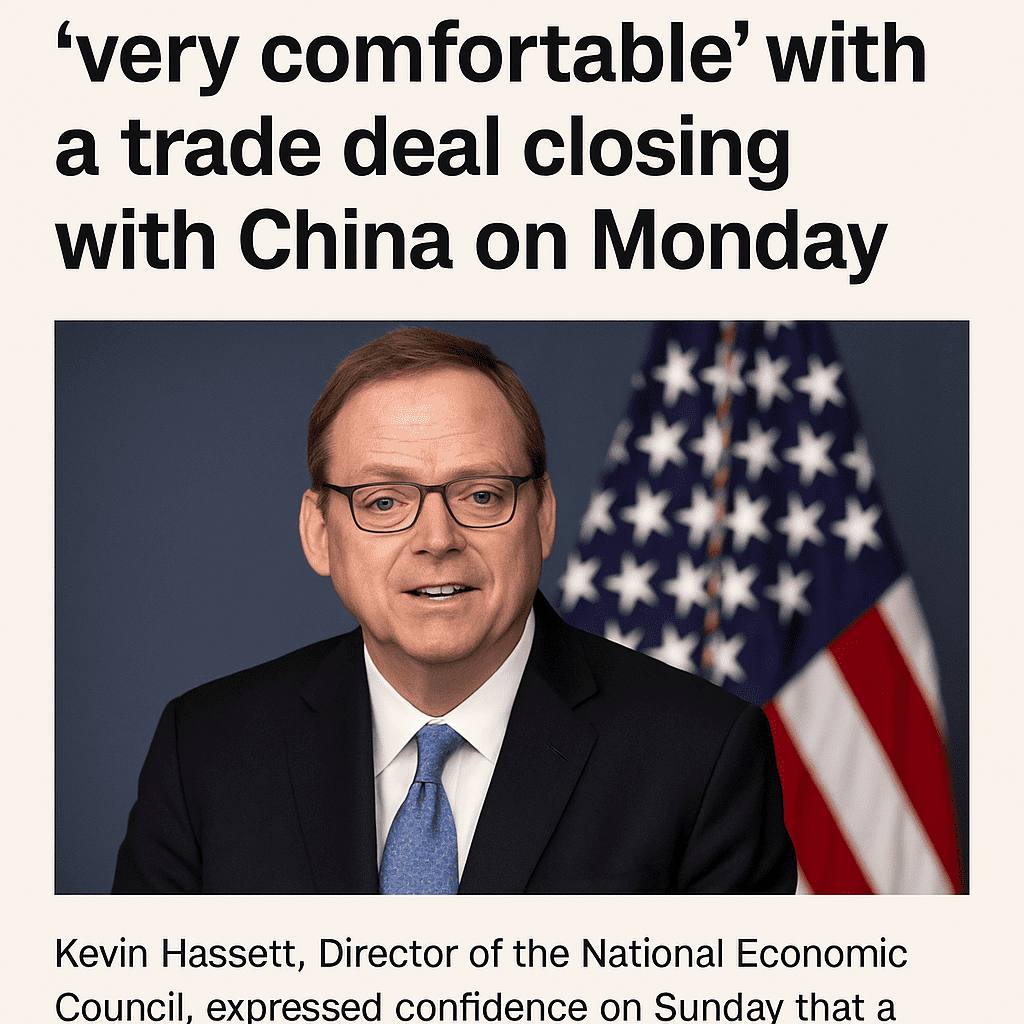
Kevin Hassett, Director of the National Economic Council, expressed confidence on Sunday that a trade deal between the United States and China would be finalized on Monday in London. Hassett’s remarks on CBS’ “Face the Nation” came after President Donald Trump stated that he had a “very good” conversation with Chinese leader Xi Jinping and that talks with China were “very far advanced.”
Key Points:
- Trade Deal in the Works: Hassett indicated that the United States is looking to restore the flow of “crucial” rare earth minerals to pre-trade war levels. These minerals, essential for manufacturing electronics, had been restricted following the escalation of the US-China trade war in early April.
- Rare Earth Mineral Flow: Hassett noted that the export of critical minerals had been ramping up, but not at the agreed rate from Geneva, where trade talks were held in May. The U.S. is aiming to restore these exports to the agreed-upon level.
- Key Negotiators: Commerce Secretary Howard Lutnick, Treasury Secretary Scott Bessent, and U.S. Trade Representative Jamieson Greer will lead the trade talks in London. The group had previously worked on negotiations in Geneva.
- Escalating Tensions: Tensions between the U.S. and China escalated after Trump posted on Truth Social, accusing China of “totally violating” the 90-day trade agreement. Under this agreement, the U.S. reduced tariffs on Chinese goods from 145% to 30%, while China cut tariffs on American imports from 125% to 10%. However, Beijing’s retaliatory measures, including restrictions on rare earth minerals, have added strain to the negotiations.
- Trump’s Tariff Strategy: Despite the tensions, Hassett reiterated that there will be tariffs in place, but he did not provide specific details about future tariff rates. U.S. Treasury Secretary Lutnick had previously stated that the baseline tariff rate would not go below 10%.
- Trade Deals and Inflation: So far, the Trump administration has secured only one trade deal, with the United Kingdom. While the administration claims that tariffs are reducing inflation and generating revenue, economists warn that these tariffs could hurt consumer spending and risk a recession. U.S. inflation slowed to its lowest rate in more than four years in April, with the annual inflation rate dropping to 2.3%.
- Customs Revenue and Deficits: U.S. customs duties reached a record $16.3 billion in April, a sharp increase from March. This surge in tariff revenue is expected to help reduce the U.S. government deficit. The Congressional Budget Office estimates that increased tariff revenue could reduce total deficits by $3 trillion over the next decade.
- Future Debt and Deficits: The U.S. government’s deficit stood at about $2 trillion in 2024, around 7% of the GDP. Meanwhile, Republicans in the House have proposed a sweeping bill that would increase the government’s debt by $3.8 trillion, according to recent CBO estimates.