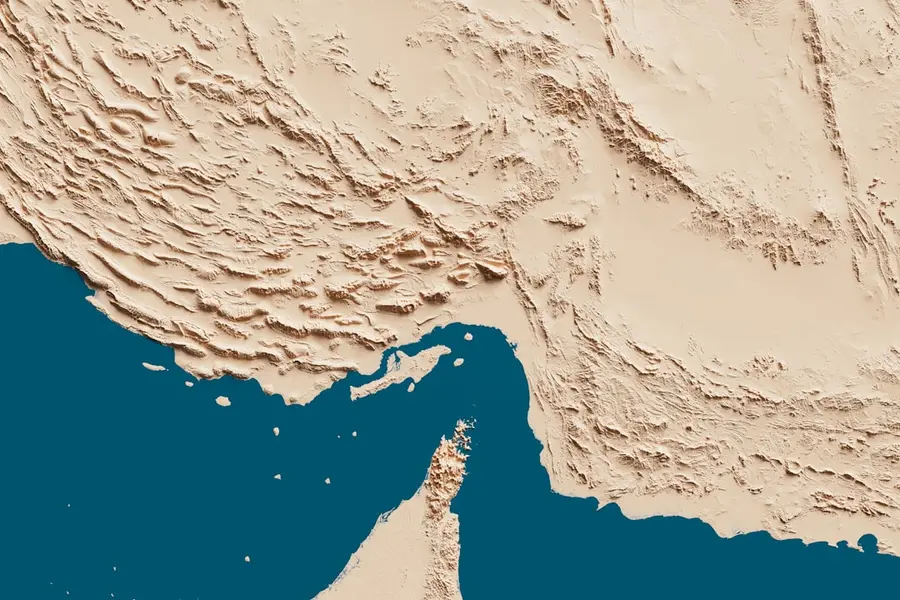
The Strait of Hormuz Security Crisis and Project Freedom
Hormuz Strait security has returned to the center of global macroeconomic discussion following President Donald Trump’s unveiling of "Project Freedom." This fresh strategic initiative intends to provide military guidance and direct protection for commercial vessels navigating the volatile maritime corridor. As kinetic attacks continue to threaten global energy supplies, the initiative aims to restore confidence in international shipping lanes.
The Strait of Hormuz serves as the world's most vital energy artery, facilitating the transit of nearly 21 million barrels of oil per day. Trump’s "Project Freedom" responds to a near-standstill in commercial traffic caused by recurring threats and regional instability. This move underscores a shift toward more assertive US maritime policy to prevent a devastating global energy supply shock.
In terms of simple economics, the Strait of Hormuz acts as a bottleneck where any restriction leads to immediate global price spikes. The response from the Trump administration through Project Freedom is a strategic attempt to de-risk this chokepoint. Without secure passage, global GDP growth could face a significant slowdown due to rising energy and logistics costs.
What Happened: Project Freedom and Iran’s Response
The announcement of Project Freedom follows a series of maritime incidents that have left dozens of tankers stranded or redirected. President Donald Trump clarified that the United States would utilize naval assets to "guide" trapped ships through the strait. This intervention is designed to counteract the deterrent effect that recent regional aggression has had on international shipping companies.
Simultaneously, the Iranian government has escalated the situation by announcing a "redefined control zone" within the Strait of Hormuz. According to reports from the Tasnim news agency, Iran intends to assert greater authority over the transit of foreign vessels. This move is widely viewed by geopolitical analysts as a direct counter-response to the proposed US naval escorts.
The answer to why the situation escalated on Monday lies in Iran's strategic positioning regarding its territorial waters and international maritime law. By redefining its control zone, Iran challenges the traditional "transit passage" rights used by global commerce. This creates a high-stakes environment where miscalculations could lead to direct military friction between US and Iranian forces.
"The redefinition of maritime control zones by Iran creates a legal and military gray zone that increases insurance premiums globally," according to recent analysis from Bloomberg Television.
Why This Matters for Global Markets
Global financial markets remain highly sensitive to any disruption in the Persian Gulf due to the immediate impact on crude oil futures. Brent and WTI crude prices often incorporate a "geopolitical risk premium" whenever the Strait of Hormuz is threatened. Investors use these benchmarks to price everything from airline tickets to industrial manufacturing costs across the globe.
Supply chain stability is another critical factor, as the Strait is not only for oil but also for significant volumes of Liquified Natural Gas (LNG). A prolonged blockage or slowdown in traffic could lead to energy shortages in Europe and Asia. Consequently, central banks, including the Federal Reserve, monitor these developments to assess potential inflationary pressures on the global economy.
The implication for the shipping industry is a dramatic rise in Protection and Indemnity (P&I) insurance costs. When a region is declared a high-risk zone, the cost of operating a tanker increases exponentially, which is eventually passed down to consumers. Project Freedom aims to mitigate these costs by providing a state-sponsored security umbrella for commercial entities.
Impact on the Brazilian Economy
The impact on Brazil is significant because the country’s economy is deeply integrated into global commodity cycles. Even though Brazil is a major oil producer, Petrobras follows international price parity for domestic fuel sales. Therefore, a crisis in the Strait of Hormuz directly translates to higher gasoline and diesel prices at Brazilian pumps.
Inflation in Brazil, measured by the IPCA, is highly sensitive to the logistics costs associated with international fuel fluctuations. Since the Brazilian economy relies heavily on road transport for food and goods, any diesel price hike triggered by Hormuz disruptions can cause generalized inflation. This often forces the Central Bank of Brazil to adjust the Selic interest rate.
The Brazilian Real (BRL) also faces volatility when geopolitical tensions rise in the Middle East. During periods of global uncertainty, international investors typically withdraw capital from emerging markets to seek safety in the US Dollar or Gold. This capital flight puts downward pressure on the Real, making imports more expensive for Brazilian businesses and consumers.
Investors on the B3 stock exchange closely monitor Petrobras (PETR3, PETR4) during these conflicts. While higher oil prices can increase the company’s export revenue, the political pressure to cap domestic fuel prices often creates uncertainty. This balancing act determines the attractiveness of Brazilian equities to foreign institutional investors during times of global maritime crisis.
What Experts Are Saying
Especialistas avaliam que Project Freedom is a high-risk, high-reward strategy that could either stabilize or ignite the region. Maritime security experts suggest that while naval escorts provide physical safety, they do not resolve the underlying diplomatic tensions between Washington and Tehran. The effectiveness of the plan depends on the participation of other international maritime powers.
According to data from Bloomberg Intelligence, maritime insurance premiums in the Persian Gulf have already risen by nearly 15% following the latest reports. Traders are currently pricing in a moderate disruption, but a full closure of the Strait would be unprecedented. Most analysts agree that the primary goal of Project Freedom is psychological deterrence rather than sustained combat.
"Project Freedom represents the most significant US naval commitment to trade protection in the Middle East since the Tanker War of the 1980s," notes a senior report from a major investment bank.
What to Expect Now: Future Scenarios
The short-term outlook depends on whether Iran attempts to enforce its new "control zone" against US-guided vessels. If Project Freedom successfully facilitates the passage of trapped ships without kinetic engagement, oil prices may stabilize quickly. However, any physical confrontation would likely send crude prices toward the $100 per barrel mark almost instantly.
In summary, investors should prepare for a period of heightened volatility in energy markets and shipping stocks. The success of Trump’s plan will be measured by the volume of traffic returning to the Strait of Hormuz. Monitoring the daily transit data and official statements from the Iranian Revolutionary Guard will be essential for identifying the next market trend.
Key Risks and Opportunities for Investors
- Risk: Escalation of military conflict leading to a total blockade of the Strait of Hormuz.
- Risk: Increased domestic inflation in Brazil due to sustained high oil prices.
- Opportunity: Growth in demand for alternative energy sources and non-Middle Eastern oil producers.
- Opportunity: Potential hedging opportunities in gold and US Dollar futures during high-volatility periods.
- Scenario: A successful "Project Freedom" could lead to a rapid de-escalation of maritime insurance costs.
The point principal é that the Strait of Hormuz remains the ultimate barometer for global geopolitical risk. Whether Project Freedom becomes a permanent fixture of maritime trade or a temporary military surge will dictate the trajectory of global energy prices for the remainder of the year. Investors must remain vigilant as this high-stakes maritime standoff continues to unfold.