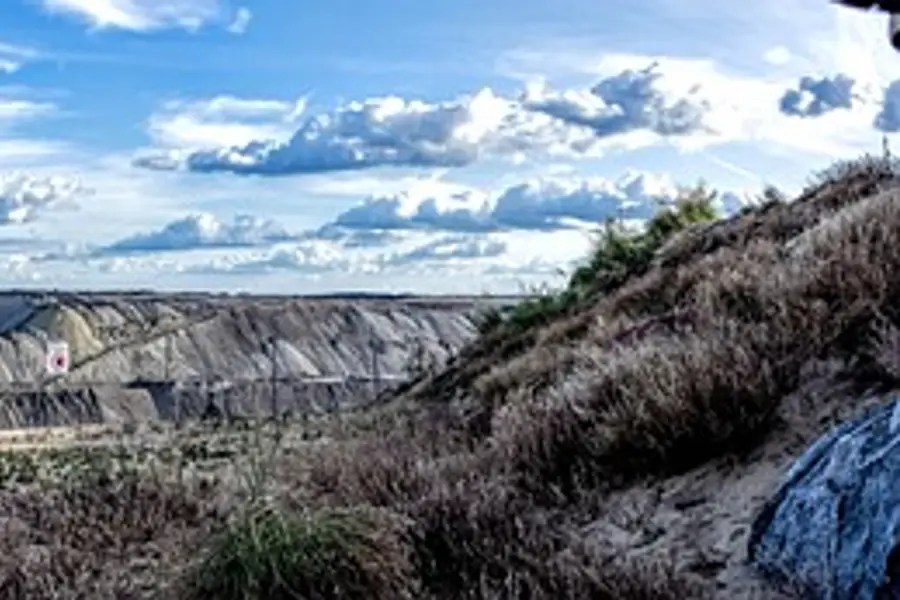
Goldquest Mining Corp. Suspends Trading Amid Dominican Republic Stalemate
Goldquest Mining Corp. (TSXV: GQC) has officially suspended trading of its common shares for the second time this week. This regulatory move follows the Dominican Republic government’s decision to halt operations at the Romero gold project after widespread environmental protests. Investors are now closely monitoring how political instability affects mining valuations across Latin America and the Caribbean region.
The short answer is that Goldquest Mining Corp. is currently navigating a liquidity crisis triggered by direct political intervention. By halting trading, the exchange prevents panic selling while the company attempts to clarify its legal standing with local authorities. Such actions are common when material information about a company's primary asset remains fundamentally compromised by external socio-political factors.
In simple terms, the Romero project represents the core value of Goldquest’s entire portfolio. Without a clear path to production or government approval, the company’s valuation becomes speculative rather than asset-backed. Consequently, the Canadian market is exercising extreme caution as it waits for a formal response from the Dominican Republic’s Ministry of Energy and Mines regarding the suspension.
Understanding the Blockade of the Romero Gold Project
The suspension of the Romero gold project comes as local communities and environmental groups express deep concerns over water contamination. Goldquest Mining Corp. faced immediate market pressure as the Dominican Republic authorities prioritized social stability over industrial development. This situation highlights the growing tension between international extraction companies and local socio-environmental movements in emerging economies.
The point principal is that the Dominican Republic is balancing foreign direct investment with domestic ecological preservation. Massive protests in the San Juan province have successfully pressured the executive branch to reconsider mining permits previously granted. Experts evaluate that the lack of a "social license to operate" is now the primary barrier for Goldquest’s project realization.
According to official data from Bloomberg Markets, the trading halt was necessary to ensure all market participants had access to the same information. Goldquest has stated that it remains committed to its environmental standards, yet the government remains hesitant to allow operations to resume. This stalemate creates a significant vacuum for investors who rely on predictable regulatory frameworks.
Global Economic Implications and Jurisdictional Risk
The implication practical is that jurisdictional risk is becoming the most significant factor in mining investment decisions. When a sovereign nation halts a project due to social unrest, the perceived risk for all similar projects in that country rises significantly. Investors often demand higher yields or lower entry prices to compensate for the possibility of project cancellation or indefinite suspension.
Especialistas avaliam que the Goldquest Mining Corp. case is a bellwether for junior miners operating in Latin America. Historically, mining companies focused primarily on geological surveys and technical feasibility. However, modern market dynamics require a robust strategy for community engagement and political lobbying to avoid the exact scenario currently unfolding in the Dominican Republic.
"The suspension of trading for Goldquest Mining Corp. serves as a stark reminder that geological wealth is irrelevant without political and social stability." — FinanceNews Editorial Board Analysis
In summary técnico, the TSX Venture Exchange (TSXV) uses trading halts as a mechanism to maintain an orderly market. When a company's primary asset is subject to government-mandated suspension, the stock price cannot reflect its true value. Until the Dominican Republic clarifies its stance, Goldquest Mining Corp. remains in a state of financial and operational limbo.
Impact on the Brazilian Market and Local Investors
The Brazilian financial market reacts to such news through the lens of commodity pricing and jurisdictional risk comparisons. While Goldquest is a Canadian firm, local investors in Brazilian mining giants like Vale or Aura Minerals analyze these events to gauge the regulatory climate. A rise in regional mining protests often leads to increased volatility in mining stocks listed on the B3.
For the average investor in Brazil, the Goldquest Mining Corp. situation highlights the vulnerability of mining-heavy portfolios. If social unrest spreads across mining regions in Latin America, the cost of capital for projects in Brazil could potentially increase. Brazilian institutional investors often view these events as a signal to hedge positions using gold or international currencies.
In terms of inflation and the dollar, any instability in the global gold supply chain can have ripple effects. While Goldquest is a junior miner, the precedent set by the Dominican Republic could influence how other nations handle mining disputes. Brazilian policymakers at the Central Bank monitor these trends as they impact global commodity indices and domestic currency stability.
Risks and Opportunities in the Current Scenario
- Regulatory Uncertainty: The risk of permit revocation remains high in jurisdictions facing election cycles or social unrest.
- Asset Devaluation: Junior miners may see their market capitalization evaporate if primary projects are permanently blocked.
- Strategic Hedging: Investors are moving toward jurisdictions with established mining laws, such as Australia or parts of Canada.
- Community Engagement: Opportunities exist for companies that successfully integrate ESG (Environmental, Social, and Governance) principles into their core operations.
Expert Perspectives on Mining Volatility
Specialists from the International Monetary Fund (IMF) and the World Bank have long warned about the "resource curse" and political instability. In the case of Goldquest Mining Corp., the rapid escalation from protests to a trading halt shows how quickly capital can be trapped. Market analysts suggest that diversification is the only protection against such specific jurisdictional events.
The response curta is that the mining sector is entering an era of heightened scrutiny. According to reports from the SEC and CVM, disclosure of social and environmental risks is no longer optional. Companies like Goldquest must now prove to both regulators and the public that their operations will not harm local ecosystems or water supplies.
Looking ahead, the Dominican Republic’s decision will likely set a precedent for the Caribbean mining sector. If the Romero project is permanently canceled, it could deter future foreign investment in the country’s natural resources. Conversely, if a compromise is reached, it may provide a roadmap for resolving similar conflicts in other developing nations, including Brazil.
What to Expect Now: Scenarios for Goldquest
O que esperar agora depends entirely on the Dominican Republic’s executive leadership and their willingness to negotiate. Goldquest Mining Corp. will likely seek international arbitration if the project remains blocked without legal justification. However, arbitration is a lengthy and expensive process that rarely provides immediate relief for retail investors or short-term traders.
In the coming weeks, market participants should watch for official statements from the Dominican government. If the suspension is lifted with new environmental conditions, Goldquest shares may see a volatile recovery. If the block remains permanent, the company may be forced to write down its assets and pivot toward other jurisdictions or face potential insolvency.
Ultimately, the Goldquest Mining Corp. saga reinforces the importance of "ESG" metrics in modern finance. Investors who ignored the social unrest in the Dominican Republic are now facing the consequences of a frozen asset. This event serves as a definitive case study for the necessity of holistic risk assessment in the global commodities market.