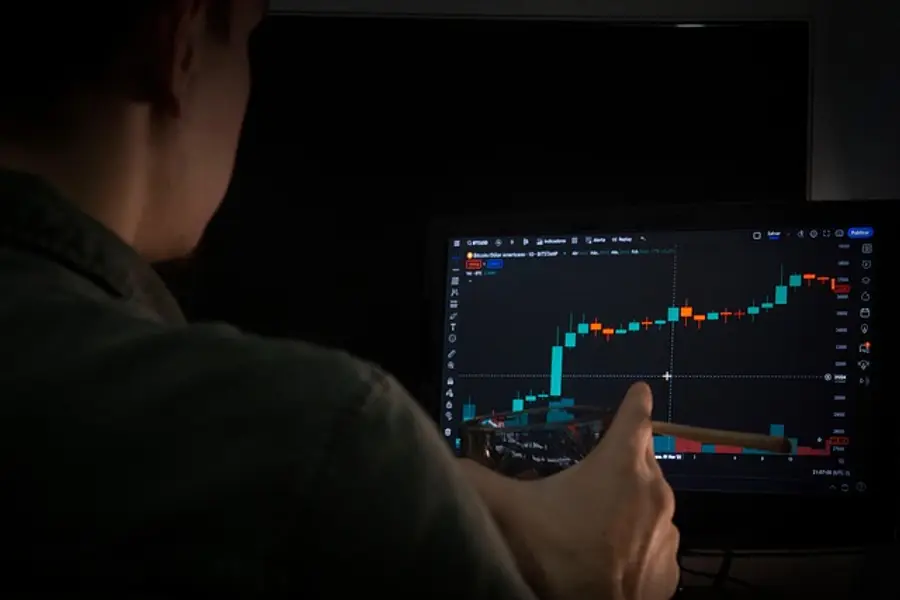
Bitcoin recently experienced a sharp correction, tumbling to the $74,300 level as United States spot Bitcoin exchange-traded funds (ETFs) faced massive selling pressure. According to official data from institutional trackers, these regulated investment vehicles registered over $2.26 billion in net outflows during the last two weeks, halting the strong momentum of cryptocurrency markets.
This abrupt shift in institutional demand marks one of the most significant retreat periods since the historic SEC approval of spot crypto products in January. The practical implication is that large capital allocators are temporarily reducing their risk exposure, which directly impacts retail investors in global markets, including Latin America's largest financial ecosystems.
For Brazilian cryptocurrency market participants, this international downturn generates immediate domestic waves, influencing both the local currency dynamics and local exchange-traded fund valuations. Understanding the mechanics of this outflow is essential for navigating the current macroeconomic environment, where traditional monetary policy and digital assets remain highly interconnected.
What Happened to Bitcoin and Spot ETFs
In simple terms: institutional investors have actively pulled liquidity from U.S.-listed spot Bitcoin exchange-traded funds over a consecutive fourteen-day period. This massive selling pressure resulted in a combined drain exceeding $2.26 billion, dragging the primary cryptocurrency down from its previous bullish consolidation zones directly to the key $74,300 support area.
Data compiled by financial analysts shows that major funds, including BlackRock's IBIT and Fidelity's FBTC, experienced substantial slowdowns in inflows, while Grayscale's GBTC continued its persistent structural redemptions. This cumulative capital flight quickly overwhelmed the natural spot buying pressure on global cryptocurrency exchanges, forcing a rapid market-wide liquidation.
The short answer is: macro liquidity is shifting away from risk-on assets as global yields adjust. The rapid decline to $74,300 highlights how dependent the modern crypto ecosystem has become on consistent, daily inflows from institutional channels, transforming Bitcoin from an isolated asset into a traditional finance macro indicator.
Why This Outflow Wave Matters
The main point is: spot ETFs have become the primary driver of Bitcoin price discovery globally since their debut. When these multi-billion-dollar vehicles bleed assets for two straight weeks, it signals a deeper shift in institutional sentiment, moving from aggressive accumulation to a cautious capital preservation stance.
In technical summary: the withdrawal of $2.26 billion in liquidity creates a market imbalance that spot buyers cannot easily absorb. Because ETF issuers must sell physical Bitcoin to match redemptions, this programmatic selling puts constant downward pressure on order books, leading to the price cascade observed in recent sessions.
Furthermore, this trend affects broader decentralized finance protocols and secondary crypto assets, which historically correlate with Bitcoin's primary price action. When the leading digital asset experiences institutional capital flight, altcoins typically face even steeper double-digit corrections, amplifying volatility across the entire global digital asset ecosystem.
The Direct Impact on Brazil and Local Investors
The domestic impact in Brazil is highly visible through the lens of local currency fluctuations and inflation expectations. As international investors seek safety, capital frequently exits emerging markets like Brazil, pushing the US Dollar higher against the Brazilian Real, which in turn fuels local inflationary pressures on imported goods.
Furthermore, local retail investors holding Brazilian-listed crypto ETFs on the B3 exchange, such as QBTC11 or BASH11, feel a double impact. While the global dollar price of Bitcoin falls, the depreciation of the Real sometimes cushions the loss in local currency terms, creating a complex risk profile for Brazilian portfolios.
Additionally, high domestic interest rates, with the Selic rate maintained at restrictive levels by the Brazilian Central Bank, make fixed-income assets highly attractive. This local monetary landscape discourages local investors from taking speculative risks in volatile assets like Bitcoin during global market downturns.
What Market Experts and Analysts Say
Experts assess that: this correction is a healthy consolidation phase rather than the start of a prolonged crypto winter. Many analysts point out that after reaching record highs, a capital pullback was statistically overdue to cleanse leveraged long positions from the derivative markets.
According to official data: long-term Bitcoin holders remain largely unfazed by this short-term ETF volatility, keeping their coins off exchanges. This behavior suggests that the current selling pressure is primarily driven by short-term institutional traders reacting to shifting macroeconomic indicators from the Federal Reserve.
Institutional research reports from major investment banks indicate that the long-term thesis for digital assets remains intact despite the recent correction. Many analysts view the current retreat to $74,300 as a classic buy-the-dip opportunity for pension funds and wealth managers waiting for better entry points.
"The massive $2.26 billion ETF outflow represents a temporary tactical pause by institutional allocators rather than a structural rejection of digital assets, suggesting that market fundamentals remain sound." — Glassnode Intelligence Report
What to Expect Next for the Crypto Market
Moving forward, the primary focus for market participants will remain on the Federal Reserve's upcoming monetary policy decisions and interest rate guidance. If the Fed maintains high interest rates for longer, institutional capital is likely to remain parked in high-yield Treasury bills rather than flowing back into Bitcoin ETFs.
Alternatively, if macroeconomic indicators show cooling inflation, the Fed might signal upcoming rate cuts, which would quickly revive institutional interest in risk assets. Under this scenario, we could witness a rapid reversal of ETF flows, driving Bitcoin back toward its previous all-time highs above the $80,000 threshold.
In the meantime, investors must carefully monitor the critical $74,000 support level, as a sustained daily close below this zone could trigger further automated selling. Conversely, a stabilization in ETF flows would signal that the current correction has run its course, establishing a strong foundation for the next bullish cycle.
To help both global and retail Brazilian investors navigate this highly volatile cryptocurrency transition, prominent market analysts have highlighted several key structural factors that long-term portfolio managers must watch closely during the upcoming international financial trading sessions.
- Downside Risks: Continued high inflation in the United States could delay interest rate cuts, keeping institutional capital in risk-free assets and prolonging ETF outflows.
- Market Opportunities: The correction to $74,300 allows long-term investors to accumulate Bitcoin at a discount before the next block reward halving cycle impacts supply.
- Potential Scenarios: A stabilization of global flows could lead to a sideways consolidation pattern between $72,000 and $76,000 before a decisive breakout occurs.