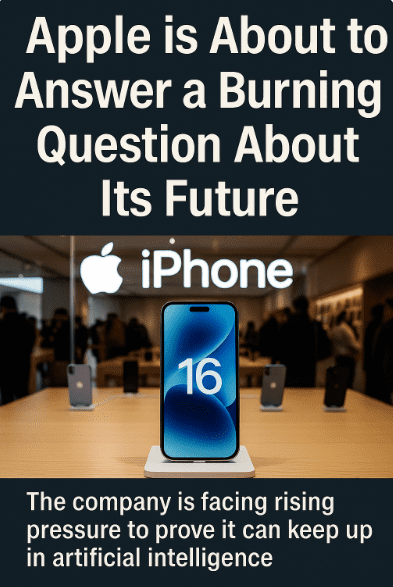
Apple is preparing for a major moment in its history as it heads into its Worldwide Developer’s Conference (WWDC) on Monday. This year’s event carries a unique sense of urgency, as the company faces heightened expectations to address questions surrounding its future, particularly in the rapidly growing field of artificial intelligence (AI). The stakes are much higher than usual, especially considering Apple’s previous struggles to establish itself as a leader in this critical sector.
Key Points:
- Apple’s Struggles with AI: Apple first introduced Apple Intelligence at WWDC 2024, a suite of AI-powered features for the iPhone and other Apple products. While the initiative generated initial excitement, delays and disappointing capabilities have left Apple trailing behind its rivals in the race to dominate AI. Unlike tech giants like Google and OpenAI, which have made significant strides in AI, Apple’s efforts to integrate this technology into its ecosystem have yet to fully convince consumers and Wall Street that it can make a mark in this space.
- What to Expect from WWDC: When the WWDC kicks off this Monday, don’t expect Apple to unveil a brand-new iPhone or an updated Apple Watch. Instead, the company will focus on showcasing software updates and new capabilities for its existing devices. These updates are expected to be focused on enhancing Apple’s current lineup of products, specifically around Apple Intelligence, and laying the groundwork for where the company hopes to take its AI technology in the coming years. WWDC is always a pivotal moment for developers, as it provides them a glimpse into the future of Apple’s ecosystem and what they can expect for the devices they already own.
- Apple’s Current AI Capabilities: While Apple Intelligence includes several noteworthy features such as summarizing text messages, recognizing real-world surroundings using the iPhone’s camera, erasing unwanted objects from photos, rewriting emails, and prioritizing notifications, these capabilities aren’t groundbreaking. They mirror AI features already offered by Apple’s competitors, including Google and Samsung. In fact, many of Apple’s rivals are already moving further with their AI technology, with offerings that execute tasks for consumers rather than just answering questions or generating summaries. For instance, Google’s advanced AI tools, which include video generation and real-time language translation, are far beyond what Apple currently offers.
- The Benefits of Apple’s Hardware and Software Integration: While Apple’s AI efforts have been slow to take off, the company still has a significant advantage when it comes to its integration of hardware and software. Apple is the only major mobile device company to control both aspects, which gives it the flexibility to develop unique and exclusive features that are tightly integrated into its products. This control allows Apple to fine-tune its devices and provide personalized experiences that its competitors may not be able to replicate. If Apple can harness its strength in hardware and software to integrate AI effectively, it could quickly catch up with its rivals.
- Consumer Expectations: Apple is facing mounting pressure from both consumers and analysts to prove that it can keep pace with the competition in AI. While many expect Apple to play catch-up in this space, its strong brand loyalty and the ubiquity of its products give it a clear path forward. Apple’s existing user base, which includes millions of iPhone, Apple Watch, and AirPods users, provides the company with a ready-made audience for AI-based features. Apple’s CEO Tim Cook has hinted at new capabilities for its devices, which may include AI-driven features like battery optimization and personalized notifications. If Apple can successfully implement AI into these existing products, it could provide a significant incentive for customers to upgrade to newer models, which would in turn drive Apple’s sales growth.
- Apple’s Long-Term AI Strategy: Looking ahead, Apple has the opportunity to position itself as a leader in AI. With its extensive ecosystem of devices, including the iPhone, iPad, Mac, Apple Watch, and AirPods, Apple has the potential to seamlessly integrate AI across its entire product line. The company is also exploring new types of devices, such as AR glasses, which could provide the next big breakthrough in consumer technology. Industry experts predict that AI will play a pivotal role in the future of technology, and Apple is betting that it can use AI to enhance the user experience and continue to drive innovation in the coming years.
- The Competition: Despite the hurdles Apple faces, the company remains a dominant force in the tech industry. Its competitors, particularly Google and Samsung, are investing heavily in AI and related technologies, which puts additional pressure on Apple to step up its game. Google, for example, has already integrated AI into its search engine, Gmail, and Chrome browser, and it continues to push the boundaries with its AI-driven products like Google Assistant and its video-generation technology. Meanwhile, Samsung has also been working to incorporate AI into its Galaxy smartphones, and it recently announced a partnership with the AI startup Perplexity to further enhance its devices. While Apple may be behind its competitors in the AI race, it still has time to catch up, particularly if it can leverage its hardware and software ecosystem effectively.
- The Future of AI at Apple: The future of AI at Apple looks promising, but it hinges on the company’s ability to execute its strategy effectively. Apple is already integrating some AI features into its newer devices, like the iPhone 16, and as AI technology continues to improve, it could become a key selling point for future Apple products. As AI becomes more ingrained in everyday life, Apple’s ability to offer AI-based services across its entire product ecosystem could be a game-changer. The company’s strong market position, combined with its control over hardware and software, makes it uniquely positioned to lead the charge in AI innovation—if it can execute on that potential.